Industry Solutions
AI answering service for landscaping and lawn care
An AI answering service for landscaping captures requests while crews are mowing, driving, or working with customers. It separates recurring lawn care from one-time projects, checks service coverage, and routes or books the next step according to your rules without inventing prices or schedule commitments.
By OpsBoost Editorial TeamUpdated 5 min read
When crews cannot stop to answer
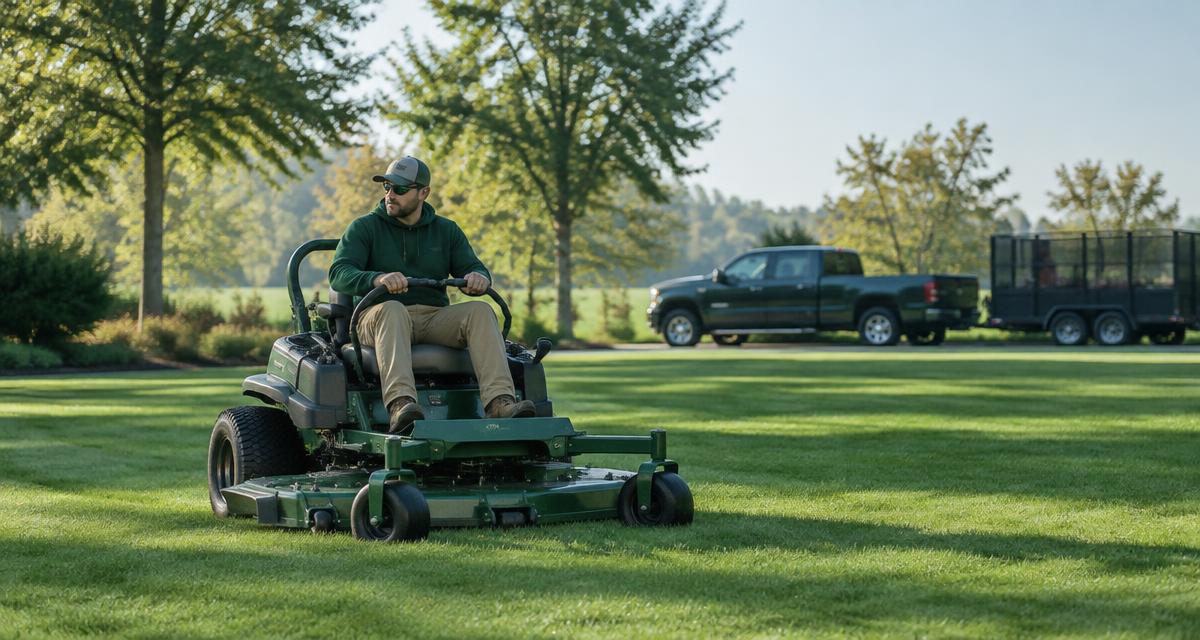
A ringing phone is difficult to manage over a mower, blower, or trimmer. Stopping equipment to take every call interrupts work, while answering during driving or equipment operation creates avoidable distractions. For an owner who also works in the field, a new estimate request may arrive at exactly the wrong moment to have a useful conversation.
Seasonal demand adds another challenge. Spring cleanups, renewed mowing requests, and project inquiries may arrive together, depending on the local climate. Existing customers still need help with gates, service questions, and schedule changes. A single voicemail inbox can mix those requests together without showing which need an office response and which belong with the route supervisor.
The purpose of an answering workflow is not to interrupt crews more efficiently. It is to capture a usable request and reserve interruptions for conditions the business has defined. Overflow call answering can cover busy periods while allowing the office to continue taking calls whenever staff are available.
Separate recurring lawn care from one-time work
Start by asking what kind of work the caller wants. Recurring mowing is a different intake path from a one-time cleanup, landscape installation, or an existing customer’s service concern. The agent should use your actual service list. It should not assume a mowing company also handles tree removal, irrigation repairs, pesticide applications, or every other outdoor job.
Swipe the table sideways to see every column →
| Request type | Useful intake details | Configured next step |
|---|---|---|
| Recurring lawn care | Address, desired frequency, approximate lawn area if known, access restrictions | Route for a recurring-service estimate or an approved consultation slot. |
| One-time cleanup | Requested tasks, property location, approximate scope, desired timing | Send the scope summary to the estimating team. |
| Landscape project | Project description, site type, goals, requested consultation timing | Book an authorized consultation or request estimator follow-up. |
| Existing service question | Customer identity, property address, service date, concern | Route to the office or designated supervisor. |
| Weather-related call | Property, scheduled visit if known, caller’s question | Share approved status information or capture a rescheduling request. |
Ask only questions that help staff move forward. A caller may not know the lawn’s square footage, and lot size is not necessarily mowable area. Record an estimate as unverified rather than treating it as measured fact. If photos would help, use a business-approved follow-up process rather than implying the phone agent can inspect the property.
Check coverage before discussing timing. Some companies serve a broad area for projects but a smaller area for recurring routes. Those distinctions belong in the rules. An address outside the regular mowing route may need review, not an automatic acceptance based solely on the city name.
Handle weather calls without inventing a schedule
Rain, saturated ground, heat, and other conditions can affect planned work. Customers may ask whether their crew is still coming, whether a missed visit will be made up, or whether the next recurring appointment has changed. The agent should answer from current, approved status information, not infer a cancellation from a weather forecast.
An approved route notice states that today’s visits are delayed
Read the authorized message and collect any customer-specific question needing office review.
No current schedule update is available
Explain that timing needs confirmation and submit a status request to the office.
A customer requests a different day
Capture the preferred dates and route the request; change the booking only within authorized scheduling rules.
A caller reports property damage or another escalation trigger
Capture the facts and contact the responsible manager under the company’s policy, without assigning fault.
Keep customer preferences separate from confirmed changes. “Customer requests Friday” is not “crew rescheduled for Friday.” When scheduling tools are connected, define which jobs may be moved and which require a dispatcher. A change that looks simple on one calendar can disrupt route density, crew skills, equipment availability, or commitments elsewhere on the route.
An illustrative lawn care call
Example
Example: a recurring mowing inquiry during the spring rush
A homeowner calls while the owner is operating a mower. The agent asks for the service address, callback number, desired mowing frequency, and any access constraints. The caller mentions a locked side gate and wants service to begin next week. The agent confirms that the address meets the configured coverage rules, records the gate restriction without requesting an unnecessary access code, and sends an estimate request. It does not promise a start date or name a final mowing price.
A useful summary makes the request easy to evaluate: new recurring customer, requested frequency, unverified property size, gate restriction, preferred start window, and callback details. If the caller also wants a one-time leaf cleanup, that should appear as a separate scope item so staff do not mistake it for an included part of mowing.
The existing lawn care demo provides a way to explore the call experience. When reviewing a demo, listen for the difference between capturing a preference and confirming a commitment. Your own workflow still needs your coverage boundaries, service menu, office hours, and handoff rules; a demonstration is not proof that every scheduling integration is already configured.
Set clear quote and booking boundaries
Landscaping estimates can depend on access, terrain, debris volume, materials, site condition, and the exact scope. The AI should not diagnose a lawn problem, prescribe treatment, or quote a final project price from a short call. It can explain an approved estimating process and repeat specific policies that the business has authorized.
Booking an estimate is also different from booking the work. If the business allows consultations to be booked, offer only the approved visit type and available slots. Confirm the contact and address, explain whether the visit is on-site or by phone, and distinguish confirmed appointments from requests waiting for staff approval. Never represent an estimate appointment as a reserved production date.
Review handoffs before adding more call volume
For an OpsBoost setup, prepare a service list, route coverage rules, escalation contacts, and a process for updating weather messages. Decide who receives new leads, who handles existing accounts, and what happens when a transfer fails. Crews should not receive every quote inquiry simply because the office is busy; the handoff needs to match how the business actually operates.
Test recurring mowing, a one-time cleanup, an unsupported service, an unclear address, and a weather rescheduling request. Check that summaries preserve uncertainty and that appointment confirmations match the scheduling record. Review early calls with the office and route supervisor, then adjust questions that cause confusion. The practical measure is whether staff can act on the request without reconstructing the conversation.